
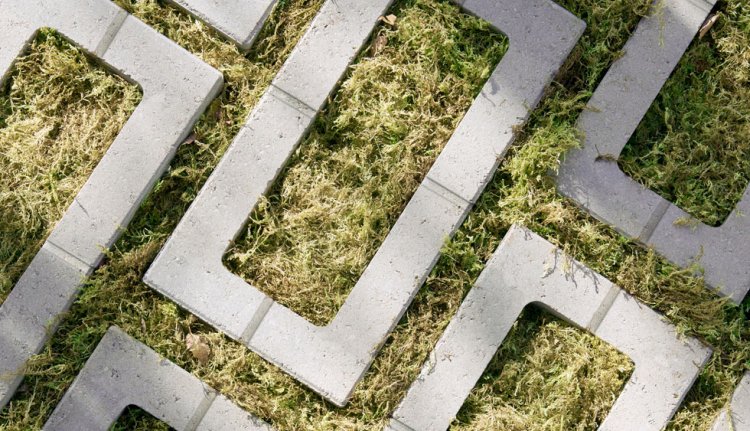
A driveway doesn’t have to be a solid expanse of asphalt or concrete. Grass driveway pavers provide a durable surface for vehicles while maintaining a greener, more natural-looking landscape. By combining structural support with spaces for grass, crushed stone, or other permeable materials, these systems help homeowners balance function, curb appeal, and environmental benefits.
From modern homes to large estate properties, grass driveway systems are becoming a popular alternative to traditional pavement—especially where drainage, sustainability, and aesthetics are top priorities. Below, we’ll walk through the benefits of grass driveway systems, different types of grass pavers, and design ideas for your driveway.
What Are Grass Driveway Pavers?
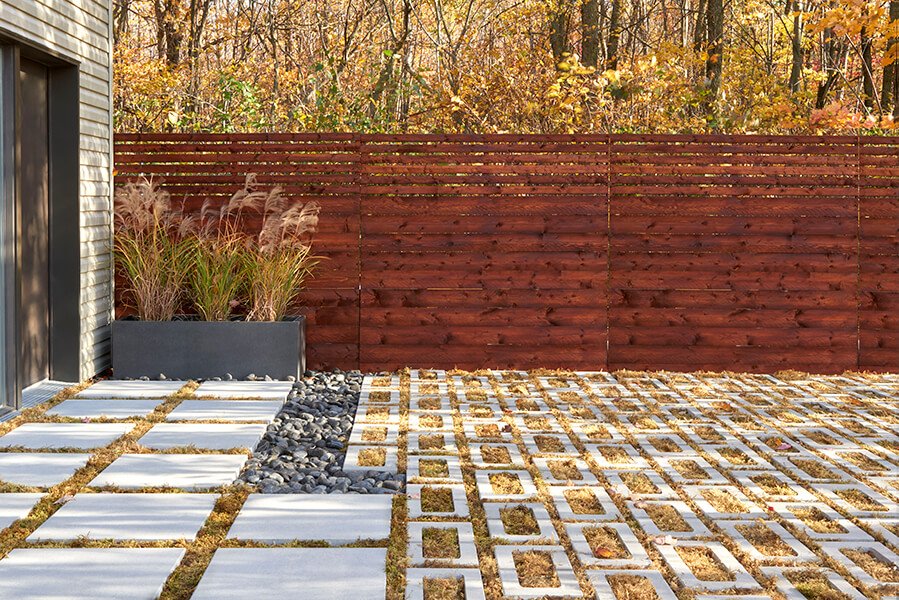
Grass driveway systems use permeable grids, pavers, and reinforcement products to protect the grass root zone from vehicle weight. By distributing loads across a reinforced surface, they help prevent rutting, mud, sinkholes, and soil compaction while preserving healthy vegetation.
Depending on the product selected, homeowners can choose from concrete Turfstone pavers, plastic grid systems, geocells, permeable pavers, and reinforced turf surfaces. These systems create stable surfaces for vehicles while allowing water to infiltrate the ground rather than run off like it would on conventional asphalt or concrete.
Because they support stormwater management and groundwater recharge, grass driveway pavers are often incorporated into broader eco-friendly masonry designs.
The Advantages of Grass Driveways

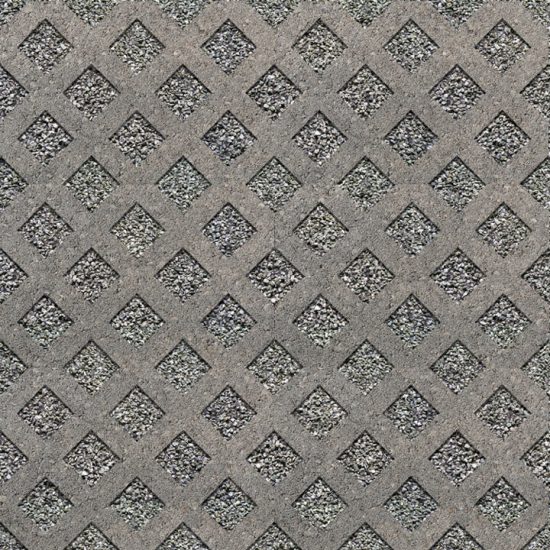
Many homeowners are initially drawn to grass driveways because of their appearance, but the benefits extend beyond aesthetics.
One of the biggest advantages is reduced stormwater runoff. Traditional pavement can send rainwater rushing across a property, carrying dirt, oil, and pollutants into storm drains and nearby waterways. Grass driveway systems help slow rainfall, encourage infiltration, and reduce erosion.
These systems can also help moderate surface temperatures. Unlike asphalt, which absorbs and radiates heat, grass and permeable materials contribute to a cooler outdoor environment.
While installation costs are often higher than asphalt, many grass driveway systems perform well through freeze-thaw cycles, leading to less long-term maintenance than cracked or deteriorating pavement.
Types of Grass Driveway Systems

Turfstone Pavers (Concrete Grid Pavers)
Turfstone pavers feature a durable open-cell concrete design that can be filled with grass or aggregate. Their strength makes them ideal for driveways, overflow parking areas, steep grades, and high-traffic applications.
Pros:
- Excellent load-bearing capacity
- Long service life
- Suitable for heavy vehicle traffic
- Strong drainage performance
Cons:
- Concrete grid remains visible
- More labor-intensive installation
- Higher cost than some grid systems
Geocell Driveway Systems
Geocells use interconnected honeycomb-shaped cells that stabilize soil and distribute vehicle loads. When filled with soil and grass, they create a reinforced living surface that helps prevent rutting and erosion.
Pros:
- Natural lawn-like appearance
- Excellent erosion control
- Effective load distribution
- Often becomes nearly invisible
Cons:
- Requires proper site preparation
- Grass health affects appearance
- Less suited for extreme loads than concrete systems
Permeable Pavers with Grass Joints
Permeable paving stones can be installed with grass-filled joints or openings, combining traditional hardscape aesthetics with the benefits of a permeable surface.
Pros:
- Attractive architectural appearance
- Wide variety of styles
- Improves drainage
- Enhances curb appeal
Cons:
- Typically more expensive
- Grass joints require maintenance
- More labor-intensive installation
Grass Driveway Ideas and Design Inspiration
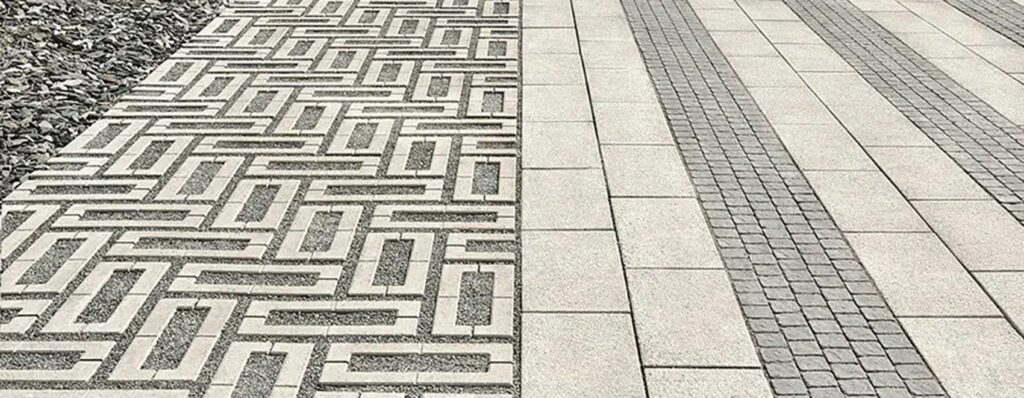
One reason grass driveway systems continue to grow in popularity is their versatility. They can complement everything from traditional homes to modern architecture.
Concrete Driveway with a Grass Strip Center
One of the most popular modern driveway designs uses two concrete wheel paths separated by a center strip of grass, like in this driveway featuring Cambridge Ledgestone 3-Pc. Onyx Natural Belgium 5 Onyx Natural. This approach softens the appearance of a traditional concrete driveway while preserving durability and reducing the amount of paved surface visible from the street.
Turfstone Driveways
Turfstone pavers create a distinctive geometric pattern that combines greenery with structural concrete. They work particularly well for estate driveways, overflow parking areas, and homes with a more formal landscape design.
Natural-Looking Geocell Driveways
For a softer, more organic appearance, geocell systems allow grass to dominate the visual landscape while reinforcing the soil below. They’re especially popular on waterfront properties and erosion-prone sites.
Low Maintenance Alternatives to Grass
Homeowners also aren’t limited to natural grass to fill the cells in the pavers. Many systems can be filled with crushed stone or artificial turf to create a low-maintenance permeable surface without the need for mowing or watering. Learn more about how artificial turf can impact drainage and runoff in our blog “How to Use Artificial Turf in Landscaping.”
Grass Driveway Pavers on Long Island
For Long Island homeowners, grass paver driveway systems offer a unique combination of durability, drainage performance, and curb appeal. Whether you’re designing a waterfront driveway, creating overflow parking, or looking for a greener alternative to traditional pavement, there are more options than ever before.
From Turfstone pavers and geocell systems to plastic grids and permeable pavers, today’s grass driveway products can help create a driveway that works with your landscape rather than competing with it.
If you’re considering grass pavers for your next project, visit our showroom in Deer Park, New York, to compare styles, colors, and permeable paving solutions in person. You can also request a quote online if you’re ready to get started.